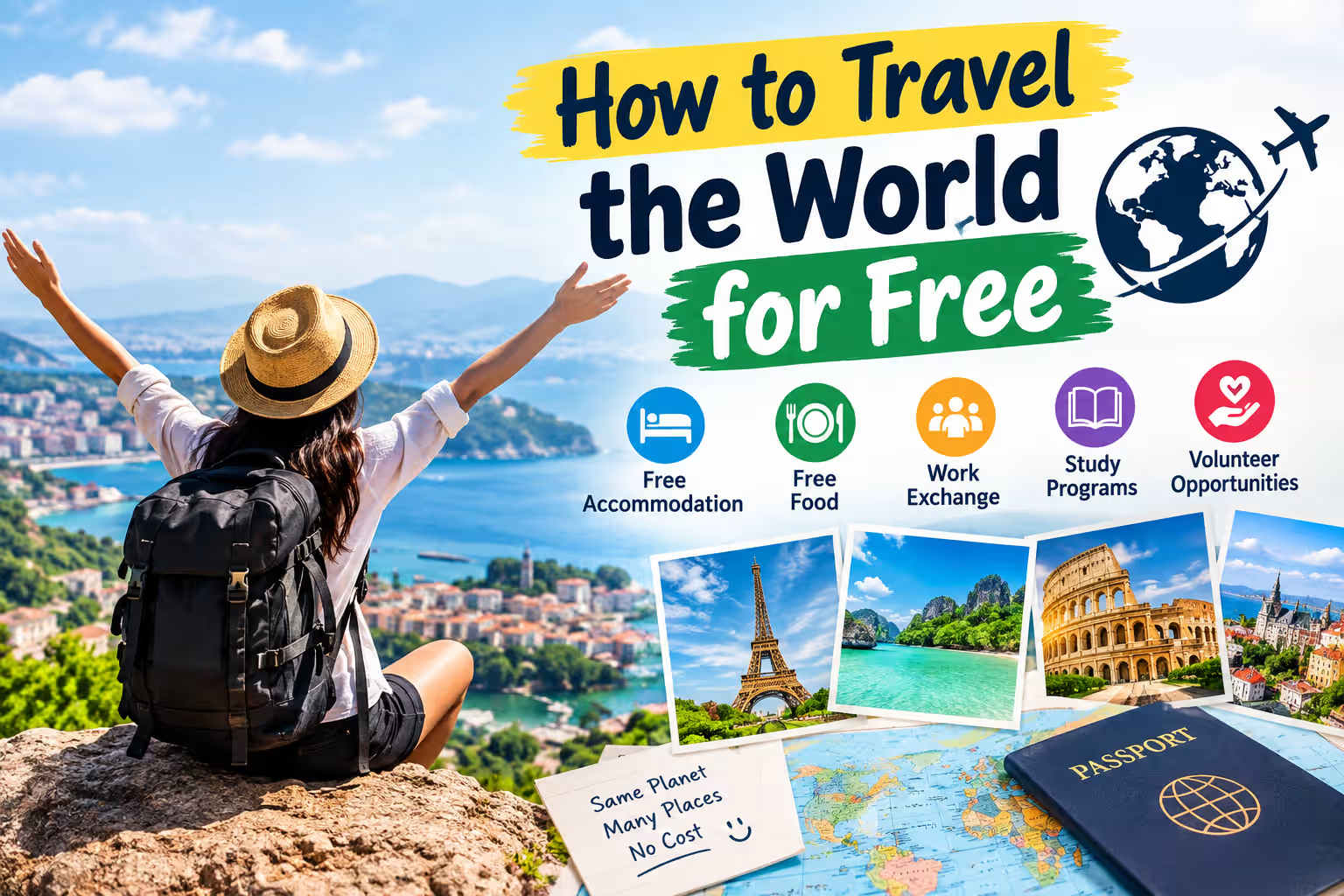
How to Travel the World for Free A Real Guide
Search “how to travel the world for free” and you’ll find plenty of headlines promising jet-setting on zero budget. The honest version is a little different: almost nothing is truly free, but there are legitimate ways to travel while spending far less than a typical tourist, sometimes by trading skills or time instead of money. This guide covers what actually works, what the trade-offs are, and how Indian travellers specifically can make use of these options.
Let’s Be Clear About What “Free” Really Means
None of the methods below hand you a free ticket, free hotel, and free meals with no effort involved. What they actually offer is one of these:
Free accommodation in exchange for work or skills (you still pay for flights and daily expenses)
Reduced-cost travel through points, miles, or deals (you still need a starting amount of spend or planning)
Income earned while traveling, so travel isn’t unpaid time off (you still need a skill or remote job)
Sponsored or comped trips, available to a small number of people with an existing audience or professional reason to be invited
Understanding this upfront helps you pick a realistic strategy instead of chasing a version of “free” that doesn’t exist for most people.
Work Exchange Programs
These platforms connect travellers with hosts who offer free accommodation, and sometimes meals, in exchange for a set number of work hours per day.
Platform Typical Work Typical Exchange
Workaway Farm work, hostel help, childcare, teaching Free stay + often meals, for a few hours of daily work
Worldpackers Hostel, eco-project, and NGO work Free stay, verified reviews system
HelpX Farms, homestays, small businesses Free stay + meals, informal arrangement
WWOOF Organic farming specifically Free stay + meals, on working farms
How it works in practice: you create a profile, browse hosts by country, message them directly, and agree on dates and work hours (commonly around 4-5 hours a day, though this varies by host). You still cover your own flights, visas, and personal spending.
Pros:
Genuinely free accommodation and often food
Deeper cultural immersion than typical tourism
Useful for long, slow travel on a tight budget
Cons:
Requires time flexibility, usually weeks per stop
Quality of hosts varies; check reviews carefully
Not really compatible with a short holiday schedule
House-Sitting
Platforms like TrustedHousesitters connect homeowners going away with sitters who stay in their home for free, usually looking after pets in exchange.
You typically need to pass identity verification and get positive reviews to access good listings
Most platforms charge an annual membership fee, so it’s not literally free to join, but the accommodation itself is
This works especially well for longer stays in expensive cities where hotels would otherwise eat your budget
Remote Work and Digital Nomad Visas
If you can work online, travel isn’t something you save up for separately; it’s something you do while earning.
Many countries now offer digital nomad visas, letting remote workers stay longer than a standard tourist visa
This isn’t “free travel” in the strict sense, since you’re still working, but your travel is self-funded as you go rather than depleting savings
Common remote income paths include freelance writing, design, development, virtual assistance, and online tutoring
Tip for Indian Freelancers and Remote Workers
If you’re earning in USD, EUR, or GBP while spending in lower-cost destinations, your money often stretches significantly further, which is part of why digital nomad travel has grown as a strategy, not because anything is free, but because earning power and cost of living are mismatched in your favor.
Travel Rewards, Points, and Airline Miles
Frequent flyer programs and travel credit cards let you convert spending or loyalty into flights and hotel stays.
Co-branded travel credit cards in India (from banks partnered with airlines or hotel chains) let you earn points on regular spending, which can later be redeemed for flights or upgrades
Airline loyalty programs reward frequent flying with free or discounted future flights
This method requires either a good credit history and disciplined repayment, or genuinely frequent travel to accumulate meaningful points
Caution: Chasing points by overspending defeats the purpose. This only works as “free” travel if you’re paying off full card balances and not carrying interest debt to earn rewards.
Volunteering and Teaching Abroad
Structured volunteer or teaching placements sometimes include free housing, and occasionally a stipend, in exchange for your time.
Teaching English abroad is one of the more established paths in countries with demand for English instruction, often requiring a TEFL certificate
NGO and volunteer placements vary widely in legitimacy and cost; some organisations charge participation fees that fund the program, which isn’t the same as free travel
Always research the organisation independently before committing, since paid “voluntourism” programs are common and not always transparent about where fees go
Crewing on Boats or Yachts

Sailors sometimes look for crew to help operate a boat in exchange for free passage and food. Websites and sailing community boards connect skippers with willing crew members.
No prior sailing experience is required for some positions, though physical fitness and reliability matter
This is a niche option but a genuine way to cross long distances (like ocean crossings) without paying for transport
Safety and vetting the skipper matters significantly here; treat it with the same caution as any arrangement with a stranger
Couchsurfing and Community Hospitality
Couchsurfing connects travellers with local hosts willing to offer a free place to stay, generally for a few nights.
It’s built on hospitality and cultural exchange rather than work exchange
Safety practices matter: check host reviews, verified profiles, and meet in public first if uncertain
It works best for short stays and solo or small-group travellers comfortable with informal arrangements
Content Creation and Partnerships
Travel influencers and creators sometimes receive sponsored trips, free stays, or press invitations. This is real, but it’s also the option people overestimate the accessibility of.
Brands and tourism boards typically look for an existing, engaged audience before offering anything free
Building that audience takes significant time and consistent content, and most creators fund their own travel long before any sponsorship arrives
Treat this as a long-term possibility, not a starting strategy
A Realistic Combination Approach
Most people who travel long-term on very little money aren’t relying on one method. A common pattern looks like:
Save enough for flights and an emergency buffer before leaving
Use work exchanges or house-sitting for accommodation
Pick up remote or freelance income along the way
Use points or rewards for occasional flights
Budget carefully for food, local transport, and visas
Practical Tips Before You Start
Check visa requirements early. As of the 2026 Henley Passport Index, Indian passport holders have visa-free, visa-on-arrival, or e-visa access to roughly 55–56 destinations, though the exact count shifts slightly with each quarterly update, so confirm current rules for your specific destinations before booking.
Budget for the “not free” parts. Flights, travel insurance, local transport, and visa fees still apply in nearly every method above.
Vet hosts and platforms carefully. Read reviews, check verification badges, and trust your judgment over convenience.
Have a financial buffer. Free accommodation doesn’t protect you from medical emergencies, cancelled plans, or unexpected costs.
Start with shorter trials. Before committing to months of work exchange travel, try a short placement to see if the lifestyle suits you.
FAQ
Is it actually possible to travel the world for completely free?
Not entirely. Every method above reduces or eliminates specific costs, usually accommodation, but flights, visas, insurance, and daily spending money are still typically required.
What’s the safest free accommodation method for beginners?
House-sitting and well-reviewed work exchange platforms (Workaway, Worldpackers) tend to have more structure and review systems than informal arrangements, making them a reasonable starting point.
Do I need a lot of money saved before trying this?
Yes, some buffer is essential. Even with free accommodation, you’ll need funds for flights, food, visas, local transport, and emergencies.
Can Indian citizens get digital nomad visas?
Yes, several countries offering digital nomad visas accept applicants globally, including from India, though requirements around income proof, health insurance, and documentation vary by country and should be checked directly with that country’s immigration authority.
Is Couchsurfing safe?
It can be, if you check host reviews and verification, communicate clearly beforehand, and use common-sense safety precautions, the same as you would with any accommodation from a stranger.
How do travel influencers get free trips?
Usually only after building a meaningful, engaged audience that brands or tourism boards want to reach. It’s rarely a starting point for someone new to travel content.
Conclusion
“Free” world travel almost always means trading something, work, time, skills, or points, for lower costs rather than paying nothing at all. Work exchanges, house-sitting, remote income, and travel rewards are all legitimate ways to travel on a much smaller budget, but each comes with real requirements and trade-offs.
The most sustainable approach usually combines a few of these methods rather than relying on one, alongside careful budgeting for the costs that never fully disappear.